James Carse wrote a book in 1986 called “Finite and Infinite Games: A Vision of Life as Play and Possibility”. His ideas complement several keys to understanding Life and achieving sustainability from an ecosystemic perspective.
A publisher website describes infinite games and Carse’s distinction:
“‘There are at least two kinds of games,’ states James P. Carse as he begins this extraordinary book. ‘One could be called finite; the other infinite. A finite game is played for the purpose of winning, an infinite game for the purpose of continuing the play.’
Finite games are the familiar contests of everyday life; they are played in order to be won, which is when they end. But infinite games are more mysterious. Their object is not winning, but ensuring the continuation of play. The rules may change, the boundaries may change, even the participants may change—as long as the game is never allowed to come to an end.”
A book reviewer, Francis Kane, wrote in 1987:
“Finite games are those instrumental activities – from sports to politics to wars – in which the participants obey rules, recognize boundaries and announce winners and losers. The infinite game – there is only one – includes any authentic interaction, from touching to culture, that changes rules, plays with boundaries and exists solely for the purpose of continuing the game. A finite player seeks power; the infinite one displays self-sufficient strength. Finite games are theatrical, necessitating an audience; infinite ones are dramatic, involving participants.”
Two close connections between the ecosystemic approach and Carse’s dichotomy relate to a distinction between discrete Life and sustained Life, and the assertion of Life as the basis of value.
Carse’s idea of two distinct game types maps onto the idea of two distinct types of Life – discrete Life and sustained Life (Fiscus and Fath 2019). We wrote:
“This dual-model view of life draws clear lines between the discrete life inherent in cells, organisms, and even species, and the sustained life inherent in communities, ecosystems, and the biosphere. In addition to the difference in the clarity of spatially boundedness of discrete life forms (…mainly cells, and organisms) which have readily recognizable skin or membrane boundaries, and the difference between the longevity of their existence, we can focus on a difference related to logic. At any point in time, discrete life forms can be determined to be either alive or dead. In contrast, sustained life forms (most clearly as applied to ecosystems and the biosphere) cannot be thus classified and instead are simultaneously both alive and dead; they contain and depend on the integration of both living and nonliving functional components.”
Discrete Life forms overlap more with finite games, and sustained Life forms relate more to infinite games. The “game of Life” for an individual is necessarily finite in time span since all individuals die. The game of Life for an ecosystem, the biosphere, or Life itself, however, is open-ended and potentially infinite in time span. The biospheric game of the Life of Earth has continued for over three billion years and “play” can potentially continue indefinitely.
Carse’s dichotomy provides a corroborating analogy for the logical, ethical, and social emphases on sustainability. Work in sustainability is like Carse’s description of an infinite game where “the purpose is continuing the play”. The effort to prioritize and achieve sustainability, such as by solving the global ecological multi-crisis, is to participate in an infinite game.
I have not yet read Carse’s book, and am not sure if he mentions this, but aligning sustainability with an infinite game brings in another issue – the infinite game is fully necessary for finite games to be possible. For example, consider sports. When a season ends (more like an infinite game, or a continuation of games), the one-on-one, finite game contests between two teams also end. Before a finite game can occur, say between Liverpool and Manchester City, the Premier League season must be underway. Likewise, if the sustained Life, infinite game of the biosphere ends, no finite game lives of individuals and organisms is possible. This necessity is a foundational scientific principle of ecology – organisms and individuals are interdependent and must exist in relation to other life forms and the environment.
The logical priority of sustained Life as necessary for individual human lives supports the assertion of Life itself as the basis of value. As the necessary precondition for human life, it makes sense to consider all decisions and choices relative to the value of continuing Life itself.
It may seem that as individuals with necessarily finite life spans, we cannot directly or deeply participate in the infinite game of Life itself. One way to participate in the infinite Game of Life is to identify with Life itself.
Identification with all Life can come through awareness of necessary and continual relationships, mutualism, and co-existence. One immediate way to do this is through mindful reflection of your breath. What is actually going on when you breathe? Who are the other participants in the recurring situation in the game that is the aspect of play that is breathing? Is breathing more like a finite game or an infinite game? We could reflect and identify with sustained Life through food, water, shelter, and more.
Similar to awareness of our interdependence with every breath and every moment of existence, we can participate in the infinite game, the Great Game, of Life itself by serving Life and working toward sustainability. Ensuring that we can continue to play is common sense. If I cannot breathe, it does not matter if my team wins today, my bank account goes up or down, I get that job promotion, or my preferred candidate wins election. We have natural motivation to continue a high-quality game of Life in our individual life spans, and to provide the opportunity for healthy and high-quality lives for our children and future generations.
The are more interesting aspects of Carse’s work. In this podcast conversation with Simon Sinek, Carse himself makes provocative points about thinking and creativity.
Carse says that in finite games your best thinking is behind you. It is like playing in the past. The game is just a demonstration of what you already know and decided to do. By contrast, with infinite games your best thinking is ahead of you. You enter each situation with an openness to novelty, ready to be creative, since the rules can change, play can change, and you can change.
Carse’s book received mixed reviews and critiques, and I need to read the book and do more reading and research. The Wikipedia page cites John Haught who connects Carse’s book to Kierkegaard’s ideas of authentic vs. inauthentic existence. I see many reasons to explore more.
In the meantime, let’s play! The ball is in your court! Any comments you wish to share on this article, or any other posts or pages on ecosystemics.org are greatly appreciated!
Thanks to Brian Fath for introducing me to Carse and infinite games.
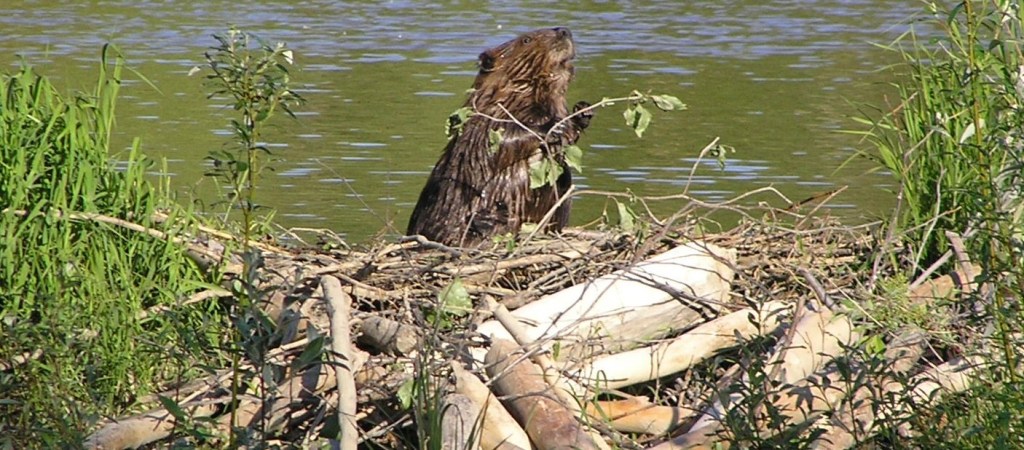
Photo of beaver on dam by Chiswick Chap from File:AmericanBeaver.jpg uploaded by Marcin Klapczynski under cc-by-sa 3.0 license, CC BY-SA 3.0, https://commons.wikimedia.org/w/index.php?curid=33744261
 ecosystemics.org
Leave a reply to Wisdom to Know the Difference – ecosystemics.org Cancel reply